
Microgrid Fueled Infrastructures
Microgrid Fueled Infrastructures (MFI) is building the next foundational pillar of resilient infrastructure: containerized, microgrid-integrated food production systems that can deliver low-cost, sustained, organic produce to virtually any community – anywhere on Earth.
Over the past several years, we’ve advanced a practical approach to food security by treating controlled-environment agriculture the same way we treat power and energy systems: as critical infrastructure that must be engineered, repeatable, and deployable at speed. Through our work developing containerized grow systems as platforms for microgrid load research, we’ve gained the real-world operational experience to turn “food resilience” from an idea into a product line – one designed, built, and supported with the same engineering discipline MFI applies to energy projects.
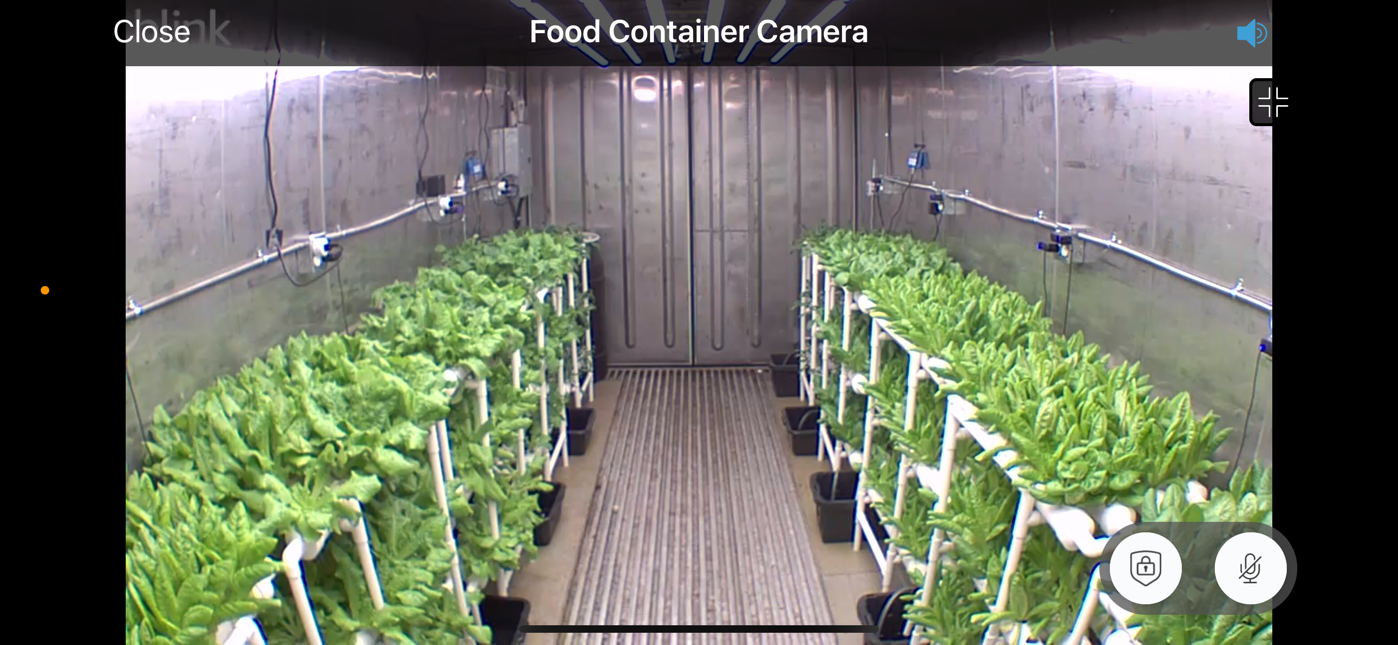
The images shown here capture that evolution: dense, healthy leafy greens grown in compact hydroponic arrays, harvested and prepared for use, and produced inside a controlled container environment – where power quality, HVAC, water flow, and lighting can be measured, optimized, and reliably reproduced.
Why Microgrid Integration Changes Everything
Container agriculture works best when it’s paired with reliable, cost-controlled, resilient power – and that’s exactly what MFI microgrids are built to provide.
When a grow container becomes a native microgrid asset, it can be optimized like any other critical load:
- Stable power quality improves equipment life and operating consistency
- Energy cost control makes organic local production economically viable
- Load shaping lets food production align with solar output and storage dispatch
- Resilience keeps food production running during grid outages and emergencies
- Scalability allows communities to add containers as demand grows
In other words: a microgrid doesn’t just power a farm – it turns food production into a dispatchable, resilient infrastructure service.
Low-Cost, Sustained, Organic Food – Anywhere
Because these systems are containerized, they do not require perfect land, perfect weather, or existing agricultural infrastructure. They can be deployed to support:
- remote communities and islanded grids
- disaster recovery and emergency logistics hubs
- military bases and critical facilities
- tribal communities and rural regions
- urban neighborhoods with limited access to fresh produce
- research campuses and industrial sites building resilience capacity
With the right microgrid backbone, communities can transition from dependency on long supply chains to local, reliable, year-round production—focused on freshness, nutrition, and sustained access.
A Foundational Pillar of the Future Infrastructure Ecosystem
Energy resilience and food resilience are inseparable. The future infrastructure ecosystem on Planet Earth will be defined by systems that are:
- distributed, modular, and rapidly deployable
- capable of operating through disruption
- efficient with water and energy
- designed for long-term sustainment
- accessible to any community, anywhere
MFI’s containerized food security product line is built to be one of those pillars—integrated with microgrids, engineered for practicality, and designed to bring sustained organic food production to the places that need it most.